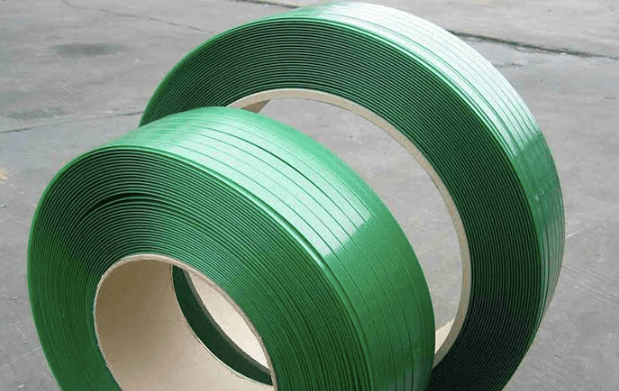
Securing palletized goods for transportation and storage represents a deceptively important logistics function, since inadequate strapping can lead to shifted loads, product damage, and safety hazards during handling and transit. PET strapping has become one of the most widely adopted solutions for this purpose across manufacturing, warehousing, and distribution operations, offering a compelling balance of strength and cost efficiency.
Why PET Has Become a Preferred Strapping Material
Polyethylene terephthalate, the polymer used in PET strapping, offers a combination of high tensile strength and elongation recovery that makes it particularly well suited to securing heavy, rigid loads during transportation and storage. Unlike steel strapping, which was historically the standard for heavy-duty applications, PET strapping offers comparable strength characteristics while presenting significantly reduced safety risks related to sharp edges and rust, along with easier handling for warehouse and shipping personnel.
Strength and Retained Tension Performance
One of the defining performance characteristics of quality PET strapping is its ability to maintain tension over extended periods, even as strapped loads experience minor settling or temperature-related dimensional changes during storage and transit. This retained tension performance directly affects load stability throughout the shipping process, making it an important specification to verify when comparing strapping products from different suppliers.
Environmental Considerations
PET strapping is manufactured from a recyclable polymer, and many manufacturers now offer strapping produced partially or entirely from recycled PET material, appealing to companies increasingly focused on reducing the environmental footprint of their packaging and logistics operations. This recyclability also extends to the strapping itself after use, supporting circular economy initiatives within packaging supply chains.
See also: What’s the Real Dose for GHRP-6? Here’s What the Studies Actually Say
Application-Specific Selection Factors
Different applications call for varying strap widths, thicknesses, and tensile strength ratings, depending on the weight and rigidity of the load being secured. Heavier, less stable loads generally require higher tensile strength strapping applied with appropriate tension, while lighter or more uniform loads may perform adequately with lighter-duty strapping specifications, making it important to match strapping specifications to actual load characteristics rather than defaulting to a single standard specification across all applications.
Compatibility With Strapping Equipment
PET strapping needs to be compatible with the specific strapping machinery used in a given operation, whether manual tensioning tools, semi-automatic strapping equipment, or fully automated strapping systems integrated into a production line. Confirming strap compatibility with existing equipment, including strap thickness and surface friction characteristics that affect equipment performance, helps avoid operational issues during implementation.
Cost Efficiency Compared to Alternative Materials
Beyond the material cost itself, PET strapping generally offers labor efficiency advantages compared to steel strapping, since it’s easier and safer to handle, reducing both application time and the risk of workplace injuries associated with steel strap edges. This combination of material and labor cost advantages has driven much of PET strapping’s growing adoption across industries previously reliant on steel strapping for heavy-duty applications.
Conclusion
PET strapping offers a compelling combination of strength, safety, and cost efficiency for securing palletized and bundled loads across manufacturing and logistics operations. Careful attention to strength specifications, equipment compatibility, and application-specific requirements ensures companies get reliable load security performance from their strapping investment.
FAQs
Q1: How does PET strapping compare to steel strapping for heavy loads? PET strapping offers comparable strength for many heavy-duty applications while presenting reduced safety risks and easier handling compared to steel strapping.
Q2: Is PET strapping environmentally friendly? Yes, PET is a recyclable polymer, and many manufacturers offer strapping made from recycled material, supporting broader sustainability goals in packaging operations.
Q3: How do I choose the right PET strap width and thickness for my application? Match strap specifications to the weight and stability characteristics of your load, with heavier or less stable loads generally requiring higher tensile strength strapping.