If you’ve ever spent a Saturday afternoon hunched over your pool with a brush and vacuum, battling algae patches and chasing leaves that seem to multiply faster than you can scoop them, you know the frustration intimately. Manual pool cleaning demands hours of physical labor, delivers inconsistent results, and turns what should be a backyard oasis into a recurring chore. Seasonal transitions only compound the problem—spring openings reveal months of accumulated grime, while autumn brings an endless assault of debris. For many homeowners, the dream of a sparkling pool clashes with the reality of maintaining one.
Enter pool cleaning robots: intelligent, autonomous machines that are transforming how we maintain our swimming pools. Their popularity has surged in recent years as technology has made them more affordable, effective, and user-friendly. This article explores why robotic cleaners represent a clear upgrade over manual methods, examining their underlying technology, the different types available, their tangible benefits for homeowners, and a practical guide to selecting the right model. Imagine stepping into your backyard to find perfectly clear water every single day—without lifting a finger. That future is already here.
The Drawbacks of Traditional Pool Cleaning Methods
Manual pool cleaning is a deceptively demanding task. What appears to be a simple routine of brushing walls and skimming the surface quickly reveals itself as a multi-hour commitment that must be repeated several times a week. Scrubbing algae from grout lines strains your back and knees, while manually vacuuming the floor requires slow, overlapping passes that test your patience. Even after all that effort, you’ll often notice spots you missed—corners where debris settled overnight or a film of fine sediment that resettled after you disturbed it.
Chemical balancing adds another layer of complexity. Without consistent cleaning, you end up overcompensating with chlorine and algaecides, creating a cycle of reactive maintenance rather than proactive care. The physical strain is real too: repetitive motions lead to shoulder fatigue, and handling long telescopic poles in awkward positions is far from ergonomic. Perhaps most frustrating is the variability—your pool’s cleanliness depends entirely on your energy level, available time, and technique on any given day. A busy week means a neglected pool, and neglect compounds rapidly. This inconsistency is precisely where automation offers a transformative alternative, delivering reliable results regardless of your schedule or stamina.
See also: Ashley Furniture Home Store Credit Card Login, Customer Services, Payments
Understanding Robotic Pool Cleaners: How They Work
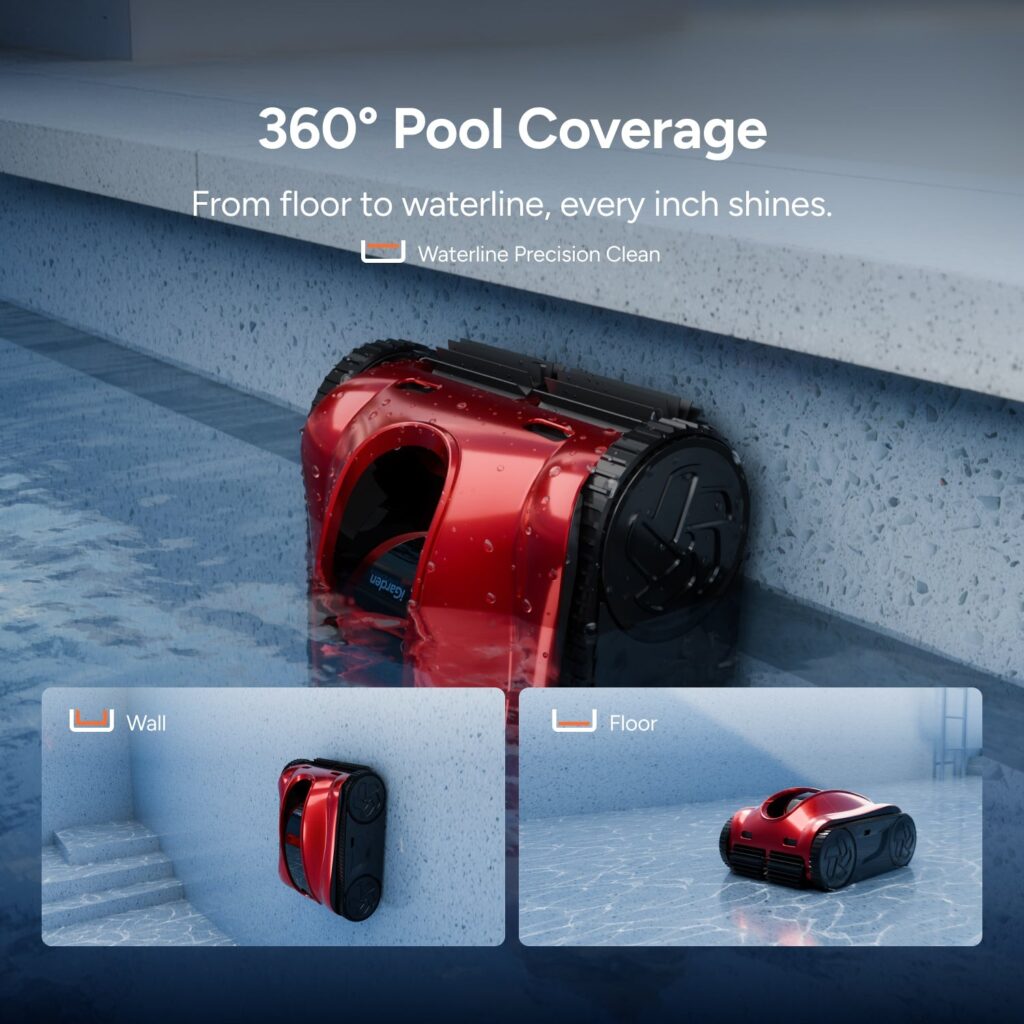
At their core, pool cleaning robots are self-contained units that operate independently from your pool’s existing filtration system. Unlike suction-side or pressure-side cleaners that rely on your pump, robotic cleaners carry their own motors, onboard filtration, and intelligent control systems. You simply place the unit in the water, press a button, and it goes to work—crawling along the floor, scaling walls, and scrubbing the waterline without any connection to your pool’s plumbing.
The Core Technology Behind Pool Robots
The cleaning mechanism combines multiple systems working in concert. Rotating brush systems—often using PVA foam or rubber bristles—loosen biofilm, algae, and stuck-on debris from surfaces before powerful internal suction pulls everything into a self-contained filter canister. These filtration units capture particles as fine as two microns, meaning they trap not just leaves and sand but also bacteria and microscopic algae that would otherwise cloud your water. The onboard motors driving these functions consume remarkably little electricity, typically comparable to running a standard light bulb. Many newer models also incorporate Wi-Fi connectivity, allowing you to monitor cleaning progress, schedule sessions, or receive maintenance alerts directly through a smartphone app.
Smart Navigation Systems Explained
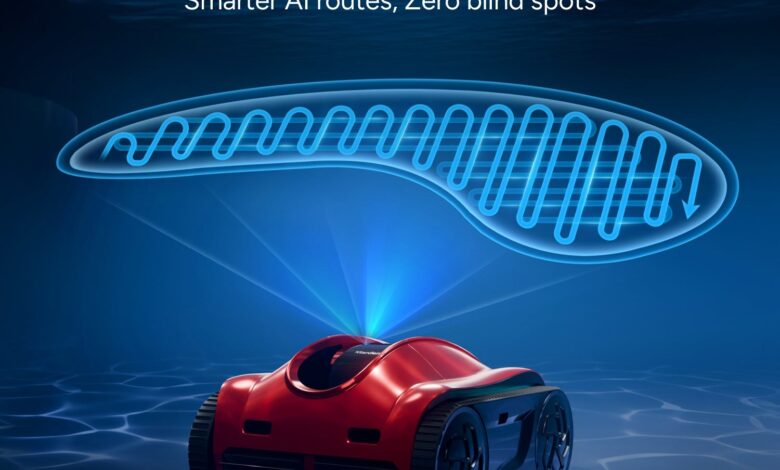
What truly separates modern robotic cleaners from older random-pattern devices is their Smart Navigation technology. Using a combination of gyroscopes, accelerometers, and infrared or ultrasonic sensors, these robots map your pool’s unique geometry during their first run. Advanced algorithms then calculate the most efficient cleaning path, ensuring systematic coverage rather than aimless wandering. When the robot encounters a step, ladder, or drain, sensors detect the obstacle and redirect its course without getting stuck. This intelligent mapping means every square inch of your pool receives attention—corners, curves, and transitions between floor and walls are all accounted for. For homeowners, the practical result is simple: you drop the robot in and trust that it will deliver thorough, repeatable results every single time without supervision or manual guidance.
Exploring Different Types of Pool Cleaning Robots
The market for pool cleaning robots has expanded significantly, offering models tailored to different pool configurations, budgets, and user preferences. Understanding the distinctions between types helps you invest in a machine that genuinely matches your situation rather than paying for features you’ll never use—or worse, buying something underpowered for your needs.
At the broadest level, every robotic pool cleaner shares the same fundamental promise: autonomous, thorough cleaning without relying on your pool’s pump or plumbing. However, the execution varies considerably. Corded models draw power continuously through a cable, offering unlimited runtime and consistent suction strength—ideal for larger pools that require extended cleaning cycles. Cordless pool cleaner models, meanwhile, run on rechargeable batteries and eliminate cable management entirely, trading unlimited runtime for unmatched convenience and portability. Between these two categories, you’ll find variations in filtration capacity, climbing ability, brush type, and smart features that determine how well a unit handles your specific pool environment.
Cordless Pool Cleaners: Freedom and Convenience
A cordless pool cleaner represents the most user-friendly entry point into robotic pool maintenance. Without a trailing power cable, there’s nothing to tangle around ladders, snag on steps, or limit the robot’s reach. You simply charge the unit, drop it in the water, and retrieve it when the cycle completes. This portability also makes cordless models excellent for households with multiple water features or above-ground pools where routing a cord is impractical. Battery life typically ranges from sixty to one hundred twenty minutes per charge, which comfortably covers most residential pools in a single session. The trade-off is that very large or heavily soiled pools may require multiple cycles, and battery degradation over several years means eventual replacement. Still, for the average homeowner seeking hassle-free operation, the cordless format delivers remarkable simplicity.
Advanced Models with Enhanced Features
Premium robotic pool cleaners push the technology further with app-based control, programmable scheduling, and multi-layer filtration systems that capture ultrafine particles. These advanced units often feature adaptive Smart Navigation that learns your pool’s layout over time, optimizing routes and reducing cleaning duration with each successive run. Some models offer remote directional control through your smartphone, letting you target specific problem areas on demand. Wall-climbing capability, waterline scrubbing, and dual-brush configurations come standard on higher-end machines, ensuring comprehensive coverage from floor to tile line. While the upfront investment is greater, these models typically feature more durable components, longer warranty coverage, and superior filtration that actively reduces your chemical consumption. For homeowners who view their pool as a significant investment worth protecting, advanced robotic cleaners deliver cutting-edge technology that pays dividends in water clarity, equipment longevity, and personal time reclaimed.
Key Benefits for Homeowners: Efficiency and Reliability
The practical advantages of robotic pool cleaners extend far beyond simply avoiding manual labor. They fundamentally change the economics and experience of pool ownership, addressing the core frustrations that drive many homeowners to consider closing their pools altogether.
Easy and Efficient Cleaning Solutions
Consider a typical weekday scenario: you arrive home from work, press a button on your phone, and by the time you’ve changed clothes and poured a drink, your pool robot is already halfway through its cycle. There’s no dragging equipment from the shed, no connecting hoses, no adjusting suction valves. The entire interaction requires less than thirty seconds of your attention. For families with children, this means the pool is always swim-ready without requiring a parent to dedicate weekend mornings to maintenance. The robot handles floor debris, wall biofilm, and waterline grime on a consistent schedule—whether you’re home, traveling, or simply enjoying your evening. This reliability eliminates the boom-and-bust cycle of manual cleaning where a pristine pool on Monday becomes murky by Thursday because life got in the way.
Long-Term Value and Maintenance Savings
Beyond convenience, robotic cleaners deliver measurable financial returns. Because they maintain consistent water clarity, your chemical consumption drops significantly—many owners report reducing chlorine usage by twenty to thirty percent since the robot continuously removes organic matter before it decays and demands chemical treatment. Your pool’s primary filtration system runs under less strain, extending pump and filter lifespan. Compared to hiring a weekly pool service, a robotic cleaner typically pays for itself within twelve to eighteen months while delivering daily cleaning rather than once-a-week visits. Modern units are engineered for durability, with brushes and filters designed as inexpensive replaceable components that keep the machine performing at peak efficiency for five years or more. The warranty coverage on quality models reflects manufacturer confidence in this longevity, giving homeowners genuine peace of mind that their investment is protected.
A Practical Guide to Choosing Your Pool Robot
Selecting the right robotic pool cleaner doesn’t require technical expertise, but it does demand honest assessment of your specific situation. The wrong choice wastes money—either on overkill features for a simple pool or on an underpowered unit that leaves you supplementing with manual work. A systematic approach ensures you invest wisely.
Assessing Your Pool’s Needs
Start by measuring your pool’s total surface area, including walls if you expect the robot to climb them. A compact plunge pool under 20 feet has vastly different demands than a 40-foot freeform design with benches and swim-outs. Surface material matters equally: textured plaster traps algae aggressively and benefits from PVA foam brushes, while smooth fiberglass or tile responds well to rubber bristles. Finally, evaluate your typical debris load. Homes surrounded by mature trees face heavy leaf accumulation requiring large-capacity filter baskets, whereas desert properties deal primarily with fine dust and sand that demand superior micron filtration.
Step-by-Step Selection Process
Once you understand your pool’s profile, narrow your options methodically. Prioritize Smart Navigation if your pool has an irregular shape or numerous obstacles—this ensures complete coverage without repeated missed zones. For pools under 30 feet, a cordless pool cleaner often provides the ideal balance of convenience and runtime. Larger pools benefit from corded models with unlimited operation time. Check filter capacity against your debris reality, verify the unit’s climbing rating matches your wall height, and research brand reputation through verified owner reviews rather than marketing claims alone. Smart home platforms like iGarden can help you explore how pool robots integrate into a broader connected home ecosystem, making it easier to manage all your outdoor automation from one place.
Installation and Maintenance Tips
Getting started is straightforward: charge or plug in your unit, lower it gently into the water allowing air to escape, and initiate the first mapping cycle. After each session, rinse the filter canister with a garden hose to prevent buildup that reduces suction. Store the robot out of direct sunlight when not in use—UV exposure degrades plastics and seals over time. Inspect brushes monthly for wear, and replace them at the first sign of flattening to maintain scrubbing effectiveness. These simple habits keep your robotic pool cleaner performing at factory-fresh levels for years.
Why Robotic Pool Cleaners Are the Smartest Investment for Pool Owners
The case for pool cleaning robots over manual methods isn’t theoretical—it’s practical, measurable, and increasingly undeniable. These machines eliminate the physical strain, time drain, and inconsistent results that define traditional pool maintenance. They deliver systematic, thorough cleaning through Smart Navigation technology that covers every surface without supervision, while their independent filtration systems actively improve water quality and reduce chemical dependency. Whether you choose a cordless pool cleaner for its grab-and-go simplicity or invest in an advanced robotic pool cleaner with app integration and adaptive mapping, you’re reclaiming hours of your life every single week.
The financial equation reinforces the decision: reduced chemical costs, extended equipment lifespan, and elimination of professional service fees mean these machines pay for themselves while delivering superior daily results. For homeowners seeking easy and efficient pool cleaning paired with long-term reliability, robotic technology represents not just an upgrade but a fundamental shift in what pool ownership feels like. As sensors grow smarter, batteries last longer, and algorithms become more refined, today’s pool cleaning robots are only the beginning. The smartest investment you can make for your pool isn’t another jug of chlorine or another hour with a brush—it’s the robot that handles both while you enjoy the water instead.